
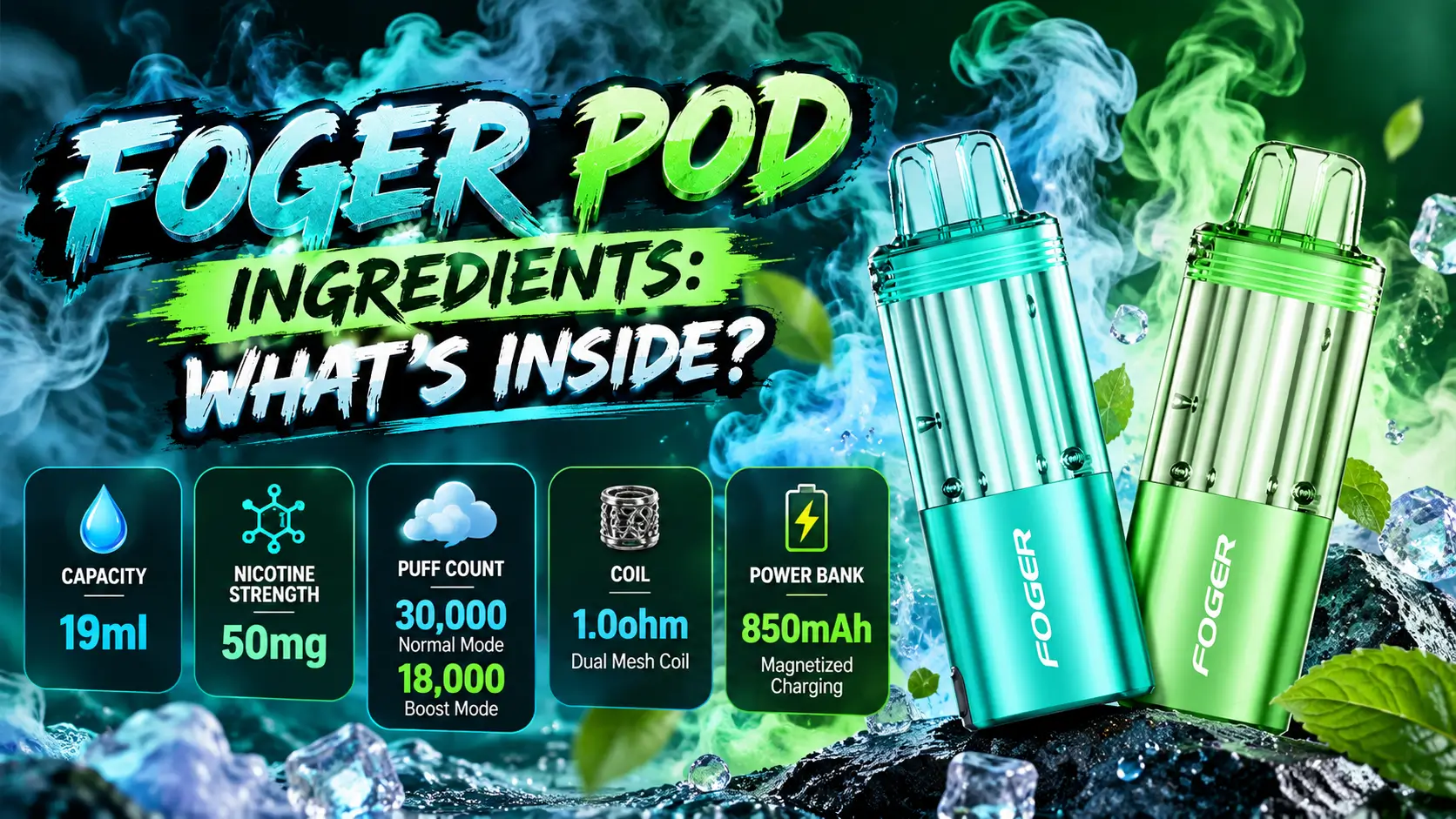
Foger Pod Ingredients: What's Inside? (Full Guide)
"What's actually in this thing?" is a fair question to ask before you inhale anything daily, and most vape brands answer it with a vague ingredient blurb buried in a footer link. That's not useful if you're trying to make an informed decision.
This guide goes through the full Foger Pod formulation category by category: the base liquid, the nicotine type, the flavoring system, and the testing standards that apply to all of it. No filler, no scare tactics — just what's in the pod and why it's there.
Full Foger Pod Ingredients List
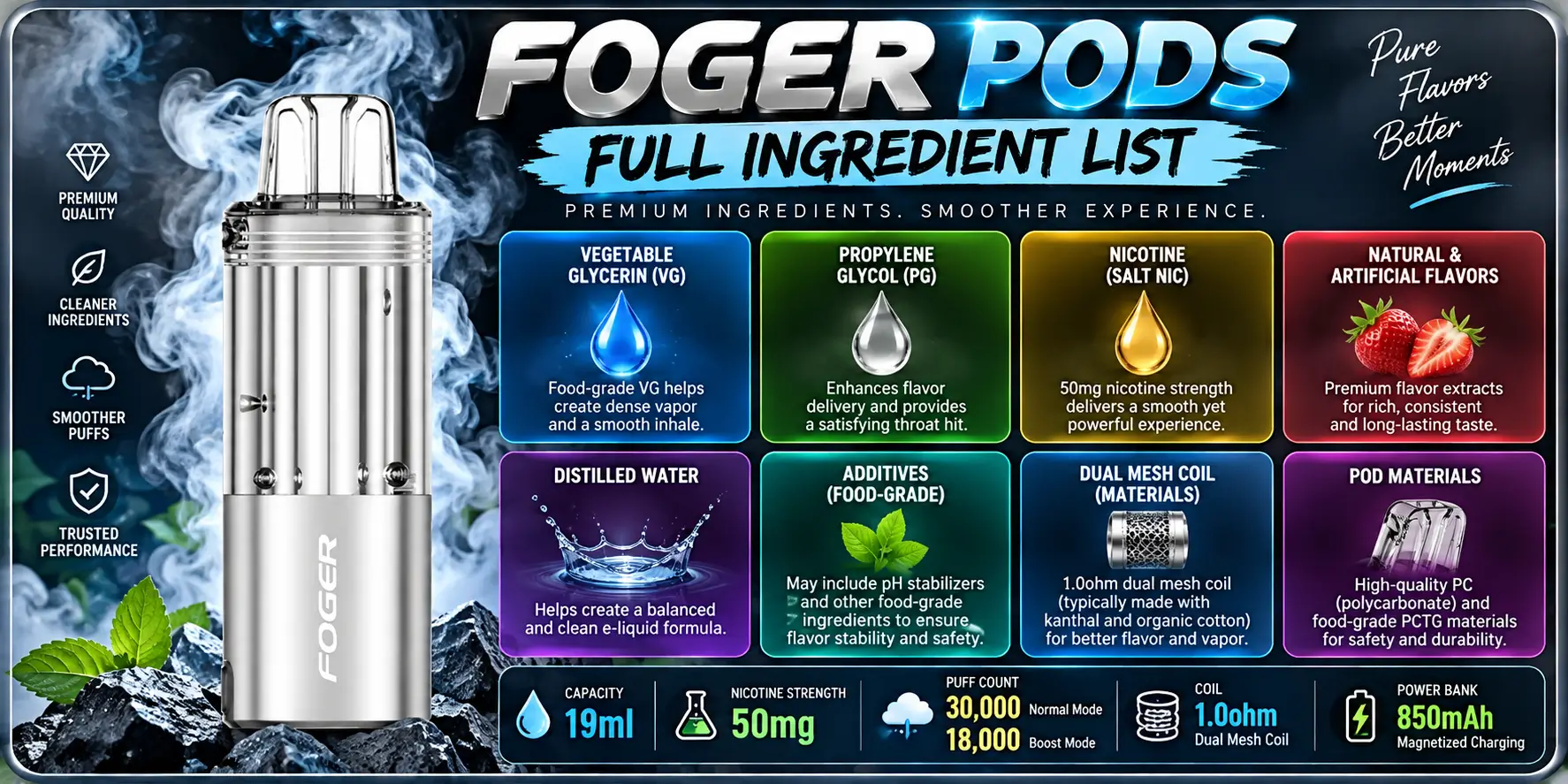
A Foger Pod's e-liquid is built from four core components: propylene glycol (PG), vegetable glycerin (VG), nicotine, and flavoring agents. That's the same base structure regulators require every commercial e-liquid manufacturer to disclose, and it hasn't meaningfully changed since pod vapes went mainstream.
| E-liquid capacity | 19ml |
| Nicotine strength | 50mg (5%) |
| Puff count | 30,000 (Normal) / 18,000 (Boost) |
| Coil type | 1.0ohm Dual Mesh Coil |
| Charging base | 850mAh Magnetized Dock |
There's no fifth "mystery" ingredient hiding in there — the 19ml fill is just PG, VG, nicotine, and flavor in different ratios depending on the flavor profile. What changes between flavors is the flavoring blend, not the underlying liquid chemistry.
It helps to think of the formulation as a fixed recipe with one variable slot. PG, VG, and nicotine strength stay constant across the entire Foger Switch Pro and Bit lineup — the only thing that shifts flavor to flavor is the specific flavoring compound blend, which is why every variant carries the same 50mg nicotine strength regardless of whether it tastes like fruit, menthol, or dessert.
The Foger Pods Puff Count — 30,000 in Normal Mode versus 18,000 in Boost Mode — is a function of how fast the 1.0ohm dual mesh coil vaporizes that 19ml of liquid, not a separate ingredient. Boost Mode heats faster and pulls more liquid per puff, so the same tank empties sooner even though nothing in the formulation itself changes.
What Is VG/PG?
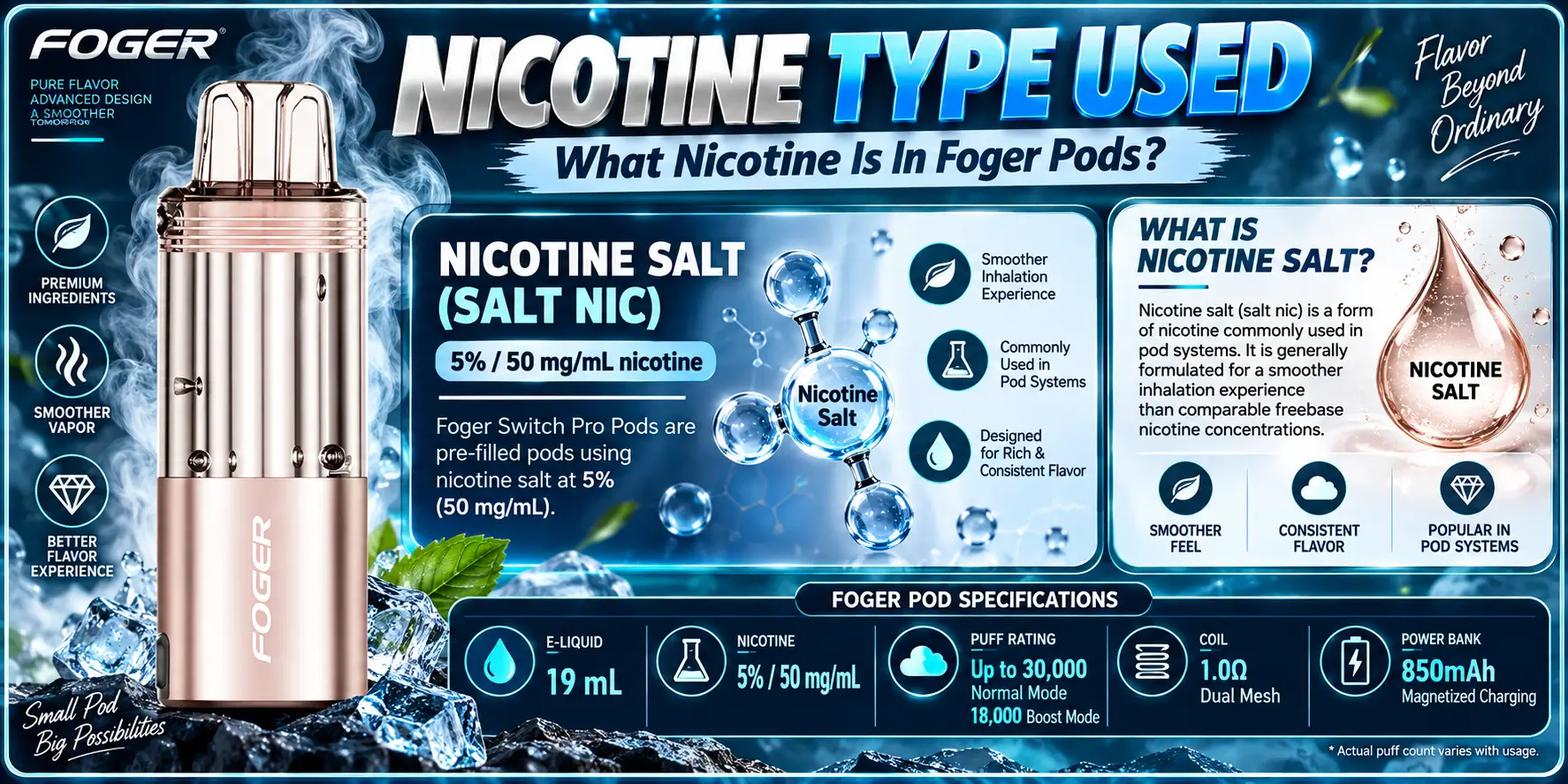
PG and VG are the two liquid carriers that make up the bulk of any e-liquid, and they exist to control two different things: throat sensation and vapor thickness. Neither one carries flavor on its own — they're the delivery medium the flavoring and nicotine ride on.
- Propylene Glycol (PG) — a thinner, less viscous liquid that carries flavor intensity and produces the sharper "throat hit" vapers associate with cigarette-like satisfaction.
- Vegetable Glycerin (VG) — a thicker, naturally sweet liquid that produces denser vapor clouds but mutes flavor sharpness slightly.
Higher-PG blends need less battery power to reach vaporization temperature since PG has a lower boiling point, while VG's higher viscosity demands more heat — which is one reason coil design and battery output matter as much as the liquid ratio itself. Most commercial pod e-liquids, Foger included, lean toward a VG-forward blend to support smoother mesh-coil vaporization and denser vapor output.
Nicotine Type Used
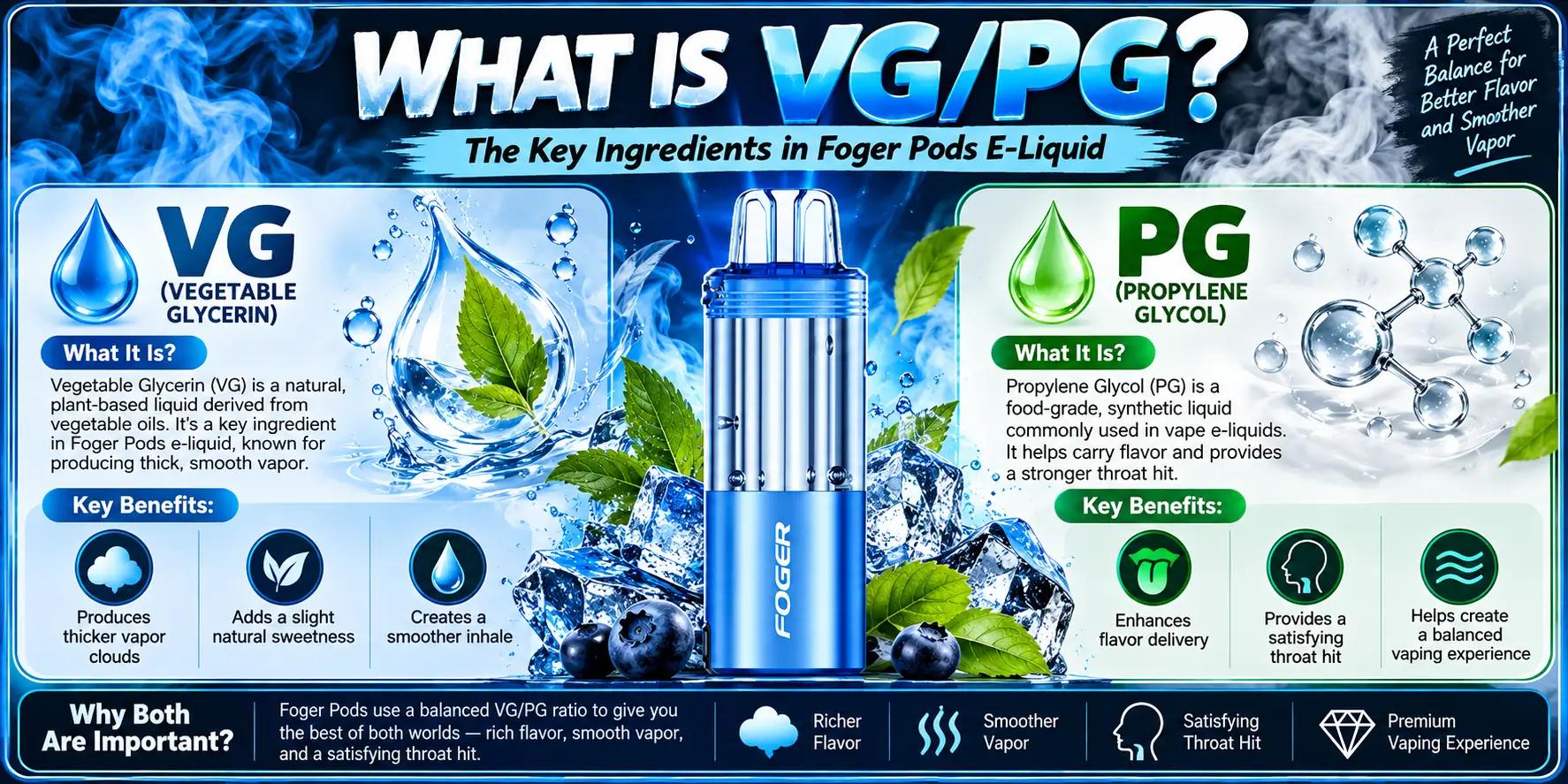
Foger Pods use nicotine salt formulated at 50mg (5%) strength, delivered through the pod's 19ml e-liquid reservoir. Nicotine salt is the dominant format across modern disposable and pod-style devices because it's designed to feel smoother at high concentrations than older freebase formulas.
Chemically, nicotine salt is nicotine bonded with an acid (commonly benzoic acid), which lowers the pH of the liquid and reduces the harsh throat hit that freebase nicotine produces at equivalent strength. That's the entire reason salt-based e-liquids can run at 50mg without feeling unbearably harsh — the chemistry, not the concentration, is what changed.
It's worth being direct here: "smoother" doesn't mean "less nicotine absorbed." Some laboratory research has actually found that the protonated form of nicotine in salt-based e-liquids can produce a stronger inflammatory response in exposed lung cells than freebase nicotine at similar concentrations — smoother sensation and lower biological impact aren't the same thing, and the reduced throat hit can make it easier to underestimate total nicotine intake.
This is exactly why draw technique matters more with a 50mg salt-nic pod than with a lower-strength freebase liquid. A slower, shorter draw delivers a more predictable dose, while long, hard pulls on a dual mesh coil can push more nicotine-laden vapor into your system per puff than intended. Our full How to Use Foger Pods walkthrough covers pacing and draw length in detail if you're new to a device at this strength.
Flavorings
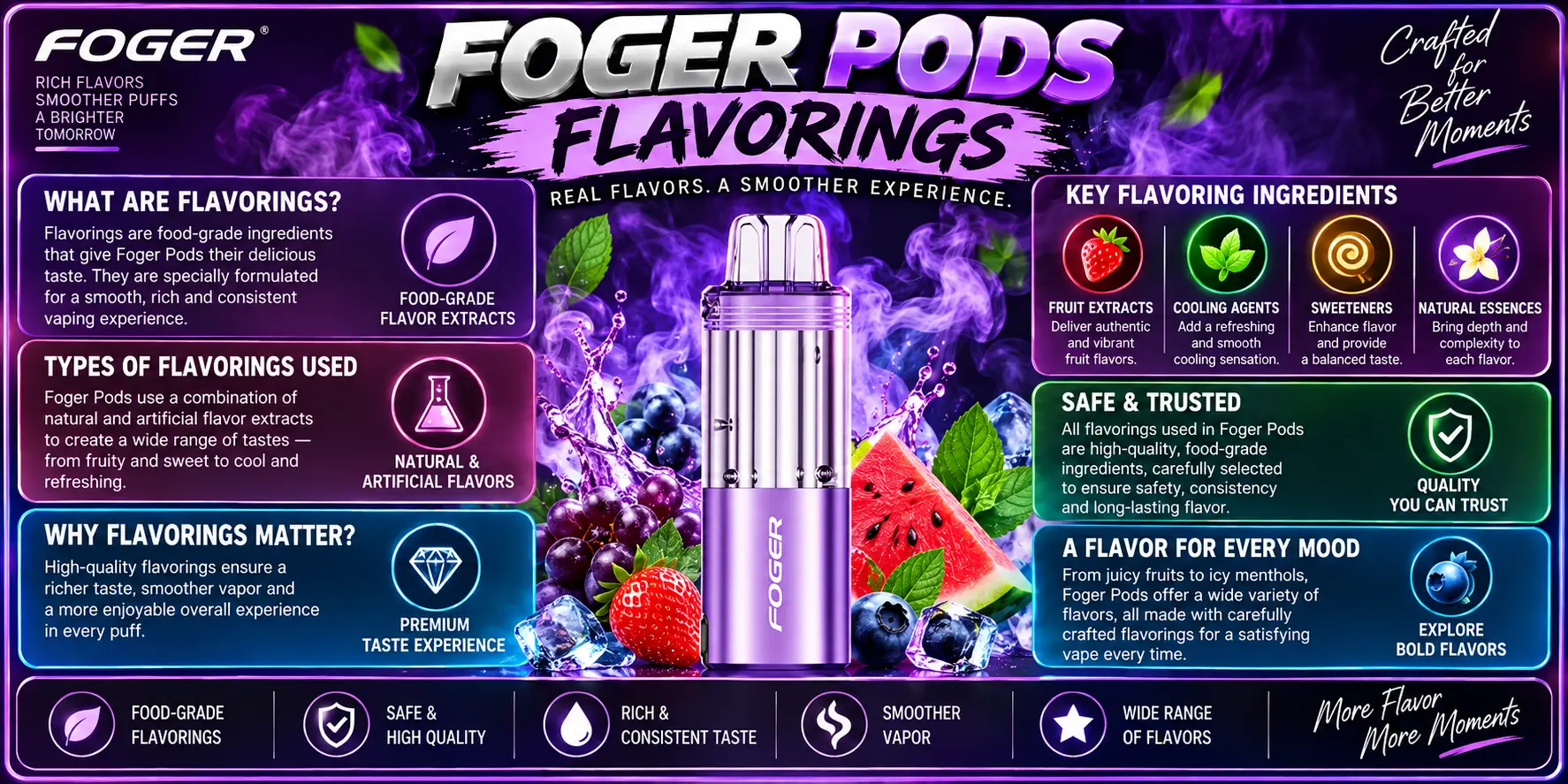
Flavoring in a Foger Pod is built from food-grade flavor compounds suspended in the PG/VG base — the same category of flavoring agents used across the broader vape and food industry, not a proprietary chemical blend unique to one brand.
"Food-grade" is an important qualifier, but it's not the same as "proven safe for inhalation." Regulatory approval for flavoring compounds is generally granted based on ingestion, and the inhalation research on long-term exposure to vaporized flavorings is still developing — a distinction that applies to the entire flavored vape category, not specifically to Foger.
Where flavor formulation does matter practically is consistency and shelf life. E-liquids naturally yellow over time as nicotine oxidizes, which is a normal aging indicator labs use to gauge freshness rather than a sign of contamination. If you want to see how flavor formulation plays out across the actual lineup, the full Foger Pods Flavors list breaks down what's blended into each variant currently sold.
One thing worth knowing: flavor intensity can shift slightly as a pod ages, even before it's empty. That's normal oxidation at work on the flavoring compounds themselves, not just the nicotine — it's the same reason an opened bottle of vanilla extract tastes a little different after months on the shelf than it did fresh. It doesn't mean the pod has gone bad; it just means flavor is a chemically active part of the formulation, not an inert additive.
Are Ingredients Safe?
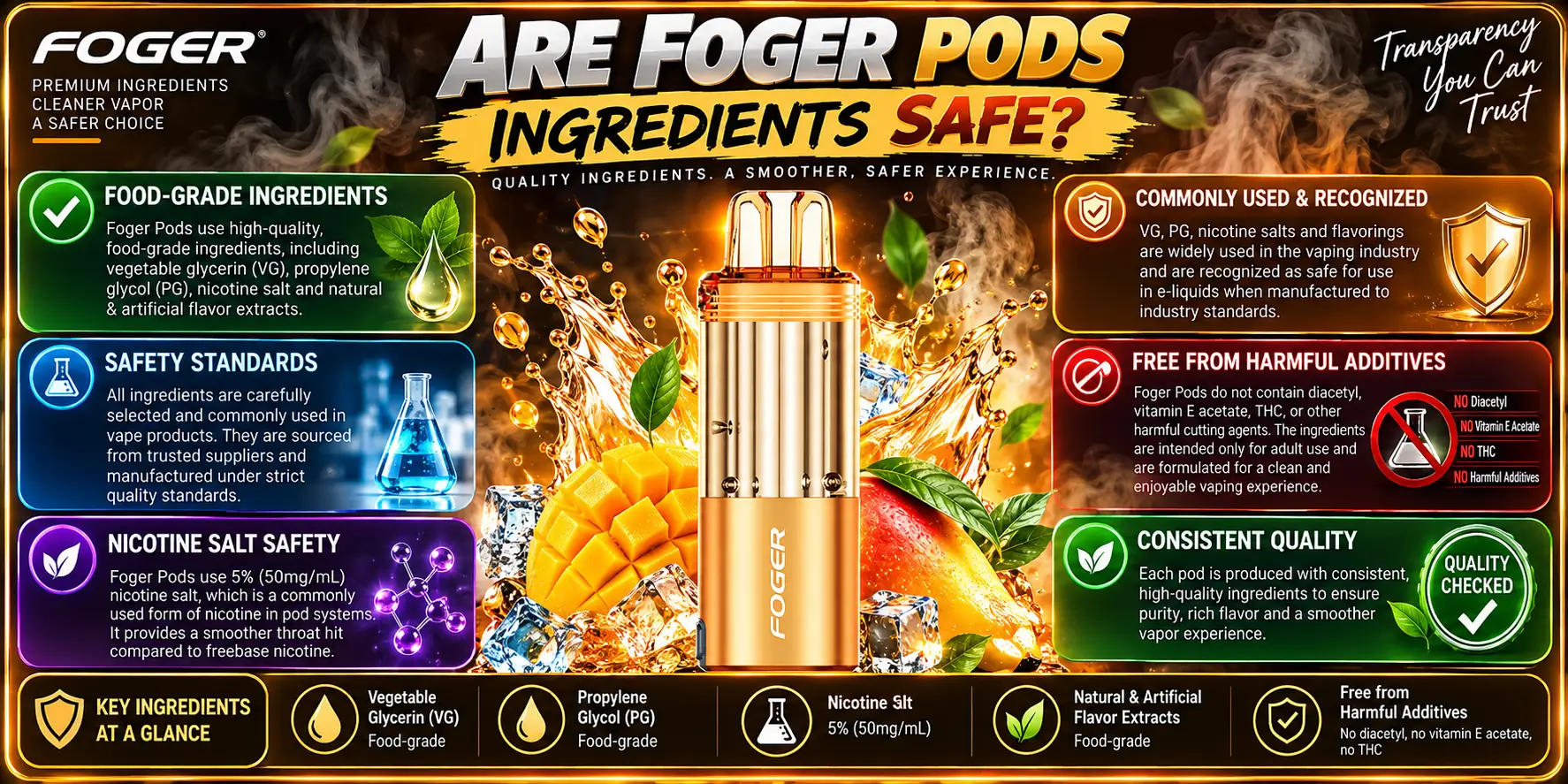
Every ingredient in a Foger Pod — PG, VG, nicotine, and flavoring — falls within categories that regulators recognize and require disclosure for. That's a baseline compliance standard, not a safety guarantee, and it's important not to conflate the two.
Laboratory research on aerosolized e-liquids has found that PG/VG combinations can produce measurable cytotoxic effects on lung cells at certain ratios, and that nicotine salts specifically have shown a stronger pro-inflammatory response than freebase nicotine in cell studies. None of this means every puff causes damage — it means inhalation exposure carries real, studied risk that differs from how these same ingredients behave when eaten or applied topically.
For a full breakdown of nicotine-specific risk, side effects, and who shouldn't use nicotine vapes at all, our dedicated Are Foger Pods Safe guide covers that in depth — this article focuses specifically on what's in the formulation, not the health risk profile of using it.
If you want a sense of how the ingredient profile holds up in daily use — flavor consistency, throat feel, any noticeable irritation — a hands-on Foger Pod Review is a more practical read than a spec sheet, since it reflects real usage rather than laboratory conditions.
Third-Party Testing
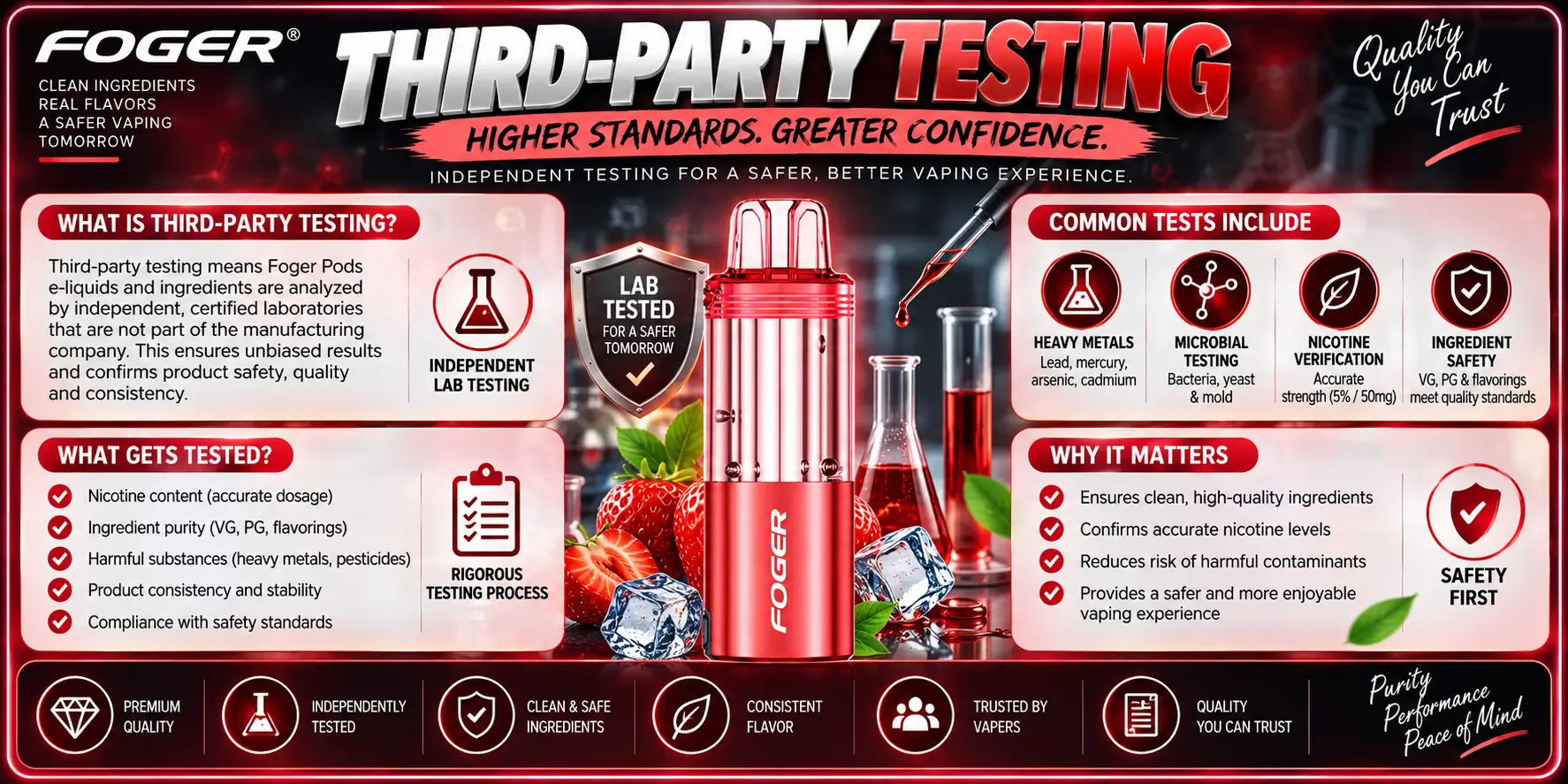
Reputable e-liquid manufacturers run their formulations through independent lab quality control (QC) covering nicotine concentration accuracy, PG/VG ratio verification, and contaminant screening — testing that exists specifically because self-reported specs aren't considered sufficient on their own in a regulated category.
Standard e-liquid QC typically checks a handful of measurable factors:
- Nicotine concentration accuracy — confirming the labeled 50mg strength matches what's actually in the liquid.
- PG/VG ratio verification — checked partly through boiling point analysis, since the liquid's composition determines its vaporization temperature.
- Color and oxidation testing — using scales like the Gardner Index to track how much an e-liquid has yellowed with age, a proxy for freshness.
- Contaminant screening — ruling out heavy metals or unauthorized additives that shouldn't be present in a compliant formulation.
This kind of QC is standard practice across the regulated e-liquid industry, not a Foger-exclusive claim — but it's also exactly the kind of documentation worth asking for directly from any retailer before buying, especially given how much counterfeit product circulates in this category. That's one more reason to stick to verified retailers when you check How Much Are Foger Pods cost across different sellers — unusually low prices are one of the more reliable red flags for untested, off-spec liquid.
This article covers product formulation and is for informational purposes only — it is not medical advice. Foger Pods contain nicotine, an addictive chemical, and are intended for adult smokers and vapers 21 and older. For safety guidance, side effects, and who should avoid nicotine vaping altogether, see our full safety guide. To confirm you're getting an authentic, properly formulated product, purchase only through Where to Buy Foger Pods official channels.
FAQs
1. Does a Foger Pod contain diacetyl or other banned flavoring chemicals?
Compliant commercial e-liquids, Foger included, are formulated without diacetyl and acetyl propionyl — flavoring chemicals historically linked to bronchiolitis obliterans ("popcorn lung") that most reputable manufacturers phased out after that risk was identified in the flavoring industry broadly.
2. Is the nicotine in Foger Pods synthetic or tobacco-derived?
Nicotine used across the pod-vape category can be sourced either way — extracted from tobacco leaf or produced synthetically — and both forms are chemically identical once formulated into nicotine salt. What matters more for the end user is the disclosed concentration, which is fixed at 50mg for this device.
3. Why does my pod's e-liquid look slightly yellow?
Yellowing is a normal oxidation process that nicotine-containing e-liquids undergo as they age, measured in labs using the Gardner Index color scale. It's an expected freshness indicator, not a sign the pod is contaminated or unsafe.
4. How long does the battery last between pod changes?
The 850mAh magnetized charging dock is a separate component from the pod's e-liquid and coil, so battery life and puff count run on independent timelines. For full charging specs and expected runtime, see our dedicated Foger Pod Battery Life breakdown.
5. Can I check ingredient batches before buying locally?
Availability and batch information vary by retailer, so searching Foger Pods Near Me is the most direct way to confirm which stores near you carry current stock and can answer batch-specific questions.
Want the full spec sheet, flavor lineup, and current pricing before you decide?
Learn More About Foger Pods